While the roasted peanut business may appear to be a "small-scale operation," it has, in reality, consistently maintained a steady and enduring demand within the global nut consumption market. Furthermore, profitability is relatively stable, with gross margins potentially reaching 20%–40%. However, the actual profit potential is contingent upon various factors, such as production scale, operational methods, equipment selection, and market positioning.
Drawing from a practical operational perspective, the following analysis will help you determine: Is the roasted peanut business truly profitable? And how does one go about starting such an enterprise?
I. Is the Roasted Peanut Business Profitable?
The answer is: Yes, it can be profitable-and the returns are relatively stable. However, the key to success lies in scale and operational proficiency.
1. Stable Market Demand
Peanuts are a highly cost-effective type of nut, enjoying a wide range of consumption scenarios:
Snacks (peanuts available in a rich variety of flavors, such as salted, spicy, etc.)
Food Processing (peanut granules, peanut flour)
Whether in Southeast Asia, Africa, or the Middle East, there is a sustained, long-term demand for roasted peanuts.
2. Clear Cost and Profit Structure
Taking a small-to-medium-scale processing operation as an example:
- Raw Peanuts: Prices are relatively stable. The cost of raw peanuts typically ranges from $0.30 to $0.50 per pound.
- Processing Costs: Electricity + Labor + Packaging
- Equipment Depreciation: Controllable (a one-time investment yielding long-term utility).
After undergoing professional roasting, the retail price for bulk roasted peanuts can typically reach between $0.80 and $1.50 per pound. If you opt for branded packaging or export markets, the unit price-and consequently the profit margin-can be even higher.
Generally speaking:
Gross margins can reach 20%–40% (depending on the specific market and operational scale).

II. Key Factors for Profitability
To make a roasted peanut business truly profitable, the key lies not merely in "selling peanuts," but rather in the following core factors:
1. Roasting Quality
Is the temperature control uniform?
Are there issues with scorching or undercooking?
Is the texture crisp and crunchy?
Utilizing continuous-flow peanut roasting equipment ensures:
- Automatic temperature control
- Uniform heating
- Stable, high-volume production
2. Equipment Selection Impacts Costs
Traditional manual roasting pans present several issues:
- High labor costs
- Low output
- Inconsistent quality
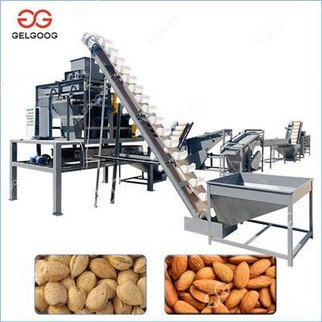
In contrast, an automated peanut roasting line enables you to achieve:
- Operation of the entire line by a single person
- Continuous production (exceeding 100 kg/h, potentially reaching 2 tons/h or even higher)
- Reduced long-term operating costs
For clients aiming for large-scale production, high-quality roasting equipment serves as the essential tool for maximizing profitability.
3. Product Differentiation
If you simply sell standard roasted peanuts, competition will be fierce. Therefore, it is crucial to develop a diverse product range; this not only enhances your competitiveness but also boosts sales volume. We recommend that you:
- Develop various flavors (e.g., honey-glazed, garlic, spicy)
- Produce peeled peanut kernels
- Produce crushed peanuts or peanut powder (which offer higher added value)
Engaging in the deep processing of peanuts leads to higher profit margins.
4. Diversifying Sales Channels
In addition to traditional retail outlets, you should actively seek to expand your sales channels; securing stable distribution channels is even more critical than the processing itself.
Common Channels:
- Wholesale markets
- Supermarkets / Convenience stores
- E-commerce platforms
- Foodservice supply chains
III. Summary
At its core, the roasted peanut business is a food processing venture characterized by relatively low barriers to entry and the potential for scalable production:
✔ Stable market demand
✔ Readily available raw materials
✔ Flexible equipment investment (adaptable to various budgets)
✔ Easy to expand into further processing
However, the true determinants of your profitability are these three factors:
- Product Quality and Variety
- Equipment Efficiency
- Sales Channels
If you are considering entering this industry, we can assist you by:
- Designing a complete roasted peanut production line solution (tailored to various production capacities)
- Calculating your Return on Investment (ROI) timeline
- Providing specific operational recommendations based on your target market
Contact us today:
Email: serena@gelgoog.com
WhatsApp/Mobile: +8615515597212